wichaa · วิชา

Living traditions of wichaa

Wichaa means knowledge — where no line is drawn between science, magic, medicine, and nature. Not one culture's craft but a human one: Lanna palm-leaf manuals, the amulets they still feed, and a globe-spanning saint-cult — one living archive, carried from palm-leaf to phone screen.

สารบบเครื่องราง · Amulet Essentials → หาตามความต้องการ · Find by need → Enter the archive ☕ Tam boon

6,986
Lanna manuscripts, from 158 temples across 53 provinces
1471 CE
the oldest — a 555-year-old scripture from Wat Lai Hin Luang, Lampang
120,178
manuscript page images, viewable on demand
31
complete manuals of working magic, digitised page by page — 4,500+ pages
15,853+
living amulets — the same wichaa, still worn and traded today
฿129
the median amulet — 89% sell under ฿500, and the top of the market at ฿1,500,059
3 months
built by one person, in Chiang Mai — free and open, forever
เดินเล่น · Wander

Today at wichaa

Eight doors, chosen by today's date — the same eight for everyone, until midnight.

The corpus

Three traditions, one wichaa

Wichaa is the subject; each of these is a tradition within it — coequal, none the trunk. The seam between them is provenance, not structure: an antique palm-leaf manual, an amulet for sale today, and a saint petitioned in New Orleans are all the same human craft of turning knowledge to effect.

Ways in

Wander wherever it leads you

ของประจำบ้าน · Kept by the house

สารบบเครื่องรางAmulet Essentialsevery kind of amulet in Southeast Asia as data — what it is, what lives in it, how to tell it from its neighbour, with pictures; photograph one and see which kind it resembles ภาษาLanguageThai writes English in Thai letters — ไนท์บาร์ซาร์ is "Night Bazaar", and a romanizer reads it "Naibasa". Roots, borrowings, and the sound carried between scripts พจนานุกรมรากWhere the words come fromnot what a word means but why it means that — each sense with the compounds it carries, and how the meaning moved สักลายHand pokehand-tattooing worldwide — 28 traditions, the tools, the inks, the marks สักขาลายThe leg tattoothe tattoo a Lanna man wore from waist to ankle, counted in the corpus ยันต์เกศาผิดA body as thirty-two lettersthe thirty-two parts of the body, one letter each, walked across the plate like a knight ใต้ร่มพรUnder the shade of blessingthe standing blessings the fleet works under — what each is, when it renews, and where the machinery lives ไหว้ครูยนต์A blessing at the machinewhat to say before you start it — and the one thing to keep while it runs ฝิ่นThe year the poppy madetwelve months of highland work, the festivals cut into them, and what changed when coffee took the poppy's slot Widgets & shitsmall free tools that do one thing — no accounts, no app store The full overviewcounts, facets, and search

Built to be read by people and by machines — faithfully. An AI or agent can start at /llms.txt or the API index; the whole corpus is open under CC-BY.

One thread, six centuries

The takrut — from the manual to the market

A takrut is a spell inscribed on a thin metal scroll, rolled tight, empowered with katha, and worn for protection or love. The knowledge for making one is old and exact. Here it is at both ends of six hundred years — the recipe, and the result.
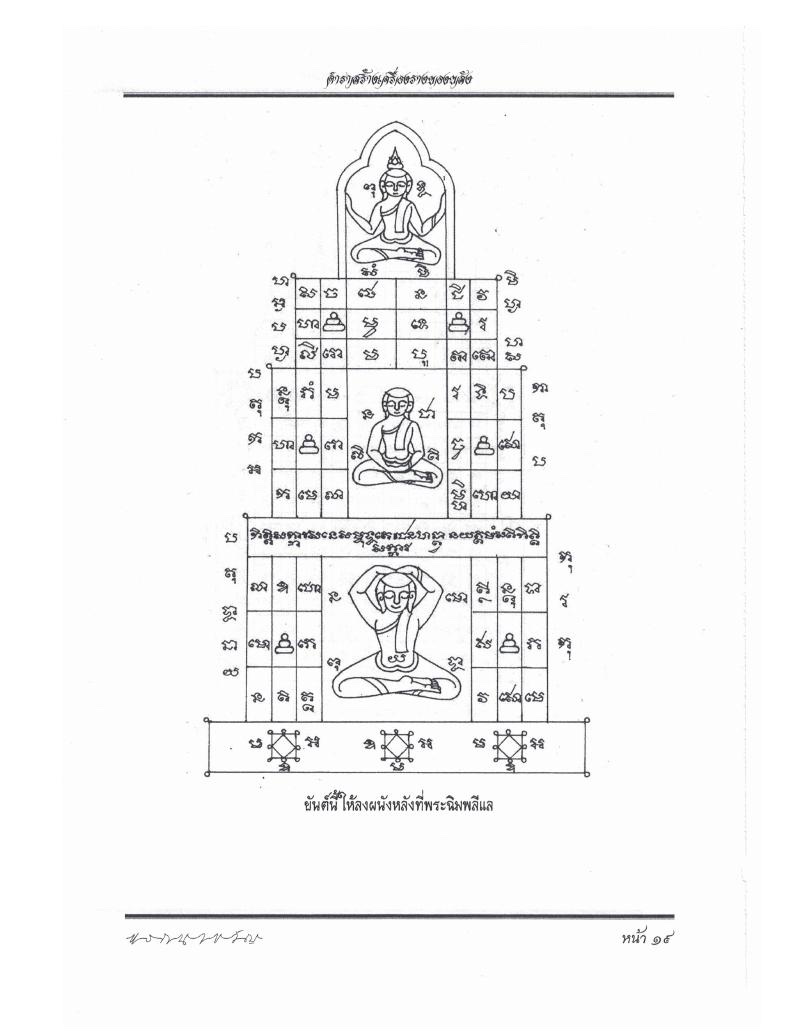
A yantra diagram from the charm-making manual, manuscript #6983
Folio from #6983 — a yantra diagram, hand-drawn
From the archive

ตำราสร้างเครื่องรางของขลัง

“Making Sacred Charms & Amulets”

A 170-page master-manual of the craft — every page now transcribed and translated. Among its formulas: how to inscribe, roll, and awaken a takrut.

Manuscript #6983 · 170 folios · fully bilingual
→ Read it, Thai & English
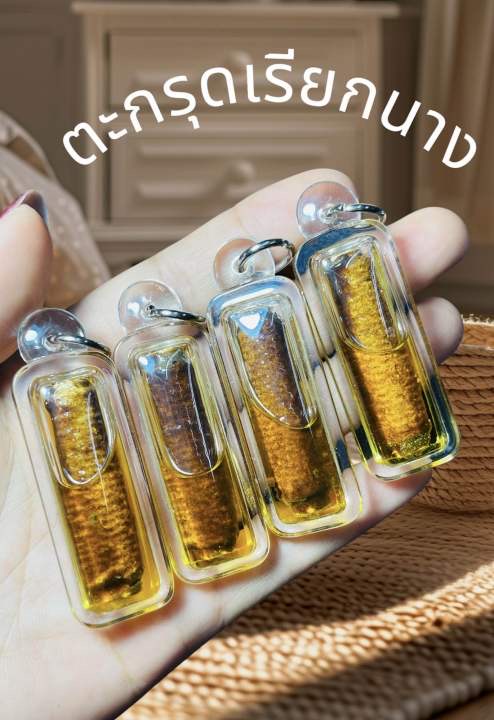
Finished takrut charms in glass vials, for sale today
Listed today — the finished charm, in hand
In today's market

ตะกรุดเรียกนาง

“Lady-calling takrut,” Luang Phor Tui

A finished takrut for sale on a phone this morning — a love-drawing scroll from a named monk, doing exactly the work the old manual describes.

฿300–400 — above the ฿129 median, still inside the 89% under ฿500
→ See listings ↗ · the whole living market

The manuscript is the recipe. The amulet is the result. The word ตะกรุด is written on both — and the tradition is still changing hands.

Deep reads

The tradition, explained by hand

The work

An archive, still growing

This is a home for wichaa — sacred, practical knowledge in every idiom it's kept. It holds the manuscripts of the Thai north, the marketplaces where amulets change hands, and a globe-spanning saint-cult of urgent causes; it will keep growing, and reaching wherever knowledge leads.

Everything here is gathered politely — from the public domain, from the open market, from wherever knowledge can be gleaned — and kept for posterity. It is given freely: no ads, no paywall, an offering. In the north they never called it magic, or science. They called it wichaa. There was never a border to cross.

A note from the maker. NaN. If someone asks me if I'm Buddhist, I say yes. I also say yes to Quaker. I would not say yes to anything else — except believing in nāgas. I follow everything that leads me, with information science. I'd do it for free; I wouldn't mind a cup of 7-Eleven noodles.

The archive stays free, always. But the reading is done by machines, and machine-time costs a little — about $0.06 to read one page, a few dollars for a whole manual. If you're moved to, you can put a coin in the bowl: it buys the bots time to read one more text, so everyone can have it. That's tam boon — merit made by opening a book for others. And you get to watch the bots work.

☕ Make merit on Ko-fi What your gift does →

Today's work

What the bots have read

The archive holds 120,178 manuscript page images. Reading them — transcribing the script, translating the Thai — is the slow craft: 4,817 pages are transcribed and translated so far, 4.0% of the whole.

115,361 pages still waiting · about $6,921 to finish at the going rate of $0.06 a page · 18 discoveries noticed by the curiosity bots so far

Where the tradition lives

Written in the north.
Traded everywhere.

Every surviving manuscript we have catalogued comes from a handful of northern provinces — the old Lanna kingdom. Every one of those traditions is still being sold, today, from nearly every province in Thailand.

The dark land is where the books are. The gold circles are where the amulets ship from. They barely overlap, and that gap is the whole story.

Open the full map →
manuscripts survive herenone recordedamulets sold here today
Coverage

What the archive knows it doesn't know

An absence you can read is worth more than a silence. Every gap here is measured at build time, names how it could be closed, and vanishes from this list when it is.

อ่านไม่ครบ · Unread pages115,361 of 120,178

Transcribed and translated, page by page. The bots have described every page; turning that into readable text is the backlog a sponsor shortens.

Sponsor a page →
เก็บภาพเอง · Images not held here6,986 manuscripts

Most manuscripts are metadata plus a live link to the library's own image server. They display, but nothing is preserved here — and a link is not a copy.

See the crawl status →
ยังไม่มีคำอธิบาย · Subjects with no prose48 written

The graph holds 23,604 things worth explaining. Articles are written by hand, and most subjects are still waiting for their first paragraph.

Read what exists →
Chiang Mai is a bbox around city + inner suburbs, NOT the whole changwatknown limit

Temples in outer CM districts are OUT OF SCOPE, not missing

The coverage record →